
Veneers vs. Teeth Whitening: Which Cosmetic Treatment Is Right for You?
When it comes to improving your smile, two treatments come up again and again at Mask Dental Studio in Norman: dental veneers and professional teeth whitening. Both can make a meaningful difference, but they work very differently and solve different problems. If you're weighing your options, this guide breaks down exactly what each treatment does, doesn’t do, and how to figure out which one fits your situation. If you ever have any questions, our team at Mask Dental Studio in Norman is here to help.
What Teeth Whitening Does (and Doesn't Do)
Professional teeth whitening uses a concentrated bleaching agent to lift stains from the surface and deeper layers of your enamel. The results are noticeable, fast, and completely non-invasive. Most patients see significant brightening in a single visit, and results can last one to three years depending on diet and habits.
Whitening works best for extrinsic staining, which is the kind caused by coffee, tea, wine, tobacco, and the natural aging of enamel. If your main concern is a dull or yellowed smile that is otherwise healthy and well-shaped, whitening is often the fastest and most affordable way to address it.
That said, whitening has its limits. It does not change the shape, size, or alignment of your teeth. It will not fix a chip, close a gap, or smooth an uneven edge. It also does not work for intrinsic staining, which is discoloration that originates inside the tooth from factors such as certain medications or dental trauma. For those situations, a different approach is needed.
What Dental Veneers Do (and Don't Do)
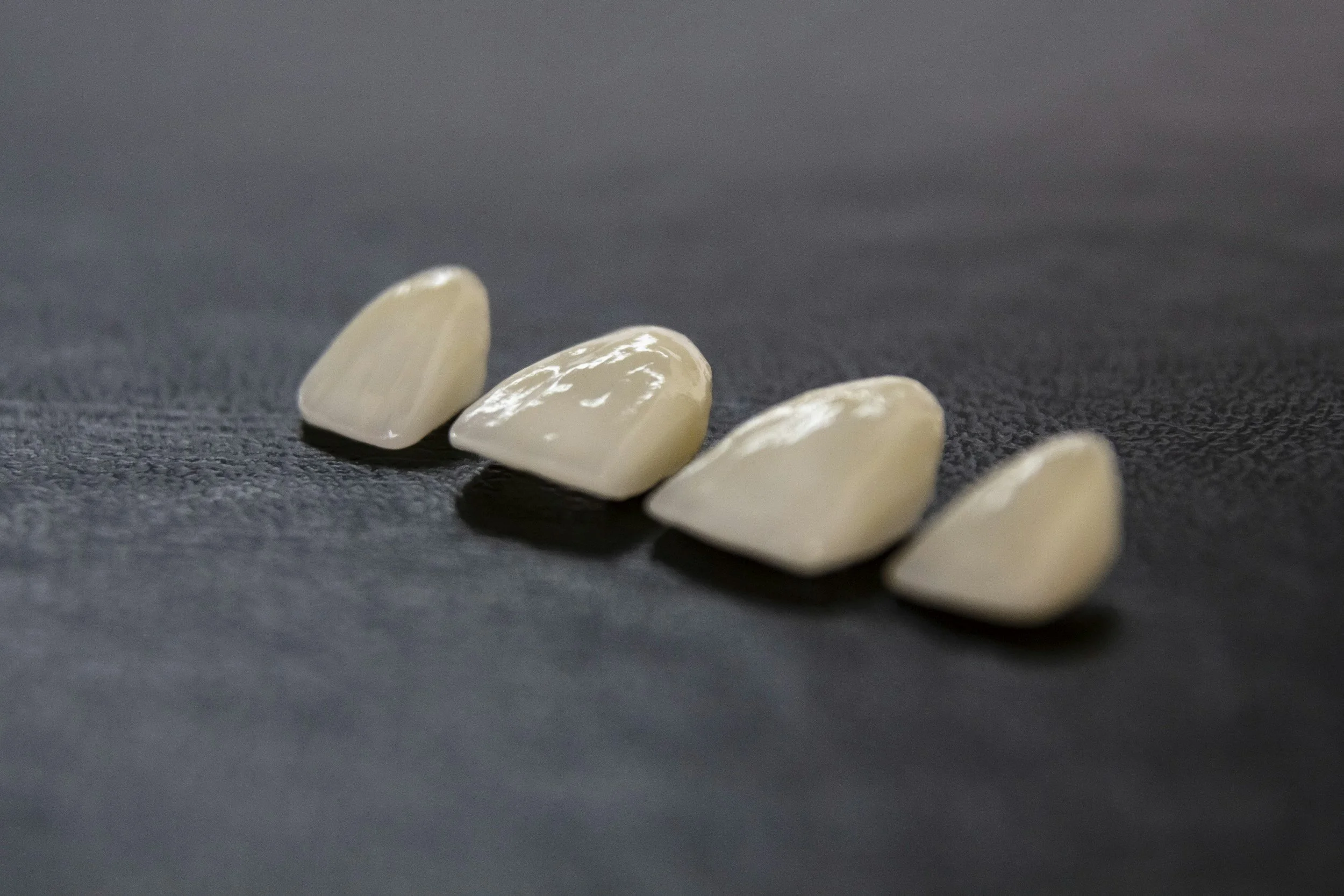
Dental veneers are thin porcelain shells bonded to the front surface of your teeth. They are among the most versatile cosmetic treatments available because a single veneer can correct multiple issues at once: severe staining, chips, cracks, gaps, and mild misalignment all become invisible beneath a custom-crafted shell that looks like natural teeth.
Unlike whitening, veneers are a permanent change. A small amount of enamel is removed during preparation, so the process is irreversible. For patients who want a longer-lasting transformation, though, 10 to 15 years of consistent results is a significant advantage over treatments that need repeating every few years.
There is one important thing to know before choosing veneers: porcelain does not respond to whitening. Once veneers are bonded, their shade is fixed. If you want to whiten your natural teeth AND get veneers, sequence matters. Whiten first, then match your veneers to the brighter shade, not the other way around.
How to Choose Between Teeth Whitening and Veneers
The simplest way to decide is to ask yourself what specifically bothers you about your smile.
If the answer is mostly about color, and your teeth are otherwise healthy, proportionate, and well-shaped, professional teeth whitening is likely all you need. It is the right fit when the goal is simply a brighter, more vibrant version of your current smile.
If the issue involves texture, shape, chips, gaps, or staining that whitening has not addressed, veneers are the stronger option. They are especially worth considering if you have already tried whitening with limited results, or if you want to address several concerns without undergoing multiple separate treatments.
For patients who are still on the fence, a cosmetic consultation with Dr. Mask or Dr. Alexander is the most direct path to clarity. They can evaluate your teeth, walk you through realistic expectations for both options, and help you build a plan that fits your goals and budget.
Can You Do Both?
Yes, in some cases combining both treatments makes sense. Some patients choose to whiten their natural teeth first, then get veneers on specific teeth to match the new, brighter baseline. This works well when you want a uniformly bright smile and only a few teeth need the additional correction that veneers provide.
What you cannot do is whiten veneers after placement. The shade chosen before bonding is the shade you keep. If you plan to whiten at any point, do it before your veneers are made so the lab can match them to your final tooth color.
Not sure which treatment is right for your smile? Our team at Mask Dental Studio in Norman is happy to help. Dr. Mask and Dr. Alexander take the time to understand your goals and walk you through every option. Contact our expert team, and take the first step toward the smile you want.